It's that easy! Part of your journey takes you away from the city lights, where the stars overhead shine brightly, undimmed by city light pollution. Lean more about Best Sightseeing Tour Company In Victoria here. As the sun sets, Victoria Best Guided Adventures reveals a different kind of magic, inviting you to embark on night tours that showcase the city's vibrant nightlife and hidden treasures under the stars. Victoria hot air balloon rides Once you've made your selection, you'll proceed to the secure payment portal. Learn more about Victoria Best Guided Adventures here The tours are meticulously designed to minimize environmental impact, incorporating eco-friendly transportation methods wherever possible.
The rising numbers don't lie. You'll marvel at the grandeur of the Royal BC Museum, where history comes alive through its captivating exhibits. You'll witness the rugged cliffs facing the pounding waves, a testament to nature's enduring strength and beauty. You'll want to capture every moment as you wander through this floral masterpiece.
As the quarry's resources were exhausted, Jennie Butchart, Robert's wife, envisioned transforming the barren pit into a breathtaking garden. Get ready to explore! As part of Star Sightseeing's unforgettable tours, you'll get the chance to immerse yourself in the stories and architecture that have shaped Victoria Best Guided Adventures into the vibrant city it is today. Imagine wandering through secret gardens nestled within the city, where the air is perfumed with the scent of unseen flowers, or discovering quaint cafes where the true flavor of Victoria Best Guided Adventures comes alive in every bite.
In essence, it's this unwavering commitment to exceptional guest services that sets these guided tours apart, transforming a simple visit into a memorable journey through Victoria Best Guided Adventures's heart. They'll teach you how to bring a piece of Victoria Best Guided Adventures's culinary magic into your own kitchen. Star Sightseeing doesn't just show you places; it immerses you in experiences. Off-the-beaten-path Victoria tours Read more about Victoria Best Guided Adventures here Follow Star Sightseeing off the beaten path to witness fall foliage like never before, perhaps even enjoying a seasonal harvest festival.
Whether you're a history buff eager to delve deep into Victoria Best Guided Adventures's rich past or an outdoor enthusiast looking for adventure in the natural landscapes, there's a tour just for you. Imagine reclining in a plush, high-end vehicle as you're whisked away to a remote viewing spot, handpicked for its stunning clarity and minimal light pollution. Victoria sightseeing with kids You're diving deep into the heart of Victoria Best Guided Adventures, where stories and landmarks, often overlooked, come to life. Beyond the city's historic charm, you'll find yourself amidst breathtaking natural landscapes that promise an unforgettable experience. Moreover, they tailor their commentary to your interests, making every tour feel personal and relevant.
You're not just a tourist; you're a participant in a larger effort to preserve the beauty and integrity of the place. From the Indigenous Coast Salish peoples, whose presence and practices deeply influence the region, to the British colonial past that's etched into the architecture and tea rooms, you're stepping into a living museum where every corner tells a story. You'll wander through bustling markets, where the air is thick with the scent of street food and the sounds of live music. Spring and summer showcase colorful flowers, while autumn brings stunning fall foliage, and winter offers enchanting Christmas lights.
Having explored Victoria Best Guided Adventures's vibrant culture, let's shift gears and blaze through the adventure trails waiting to be discovered. You'll explore hidden coves and perhaps even spot some of Victoria Best Guided Adventures's diverse wildlife, from majestic eagles soaring above to playful seals frolicking in the waters. Securing your spot on Star Sightseeing's signature Victoria Best Guided Adventures tour requires just a few simple steps. The tour doesn't stop there; you'll also discover lesser-known gems like the St.
Come fall, the Japanese Garden showcases a serene palette of autumn hues, and winter's magic is alive in the crisp air, with twinkling lights and evergreen splendors. You'll find yourself weaving through the vibrant fabric of local markets, tasting the richness of Victoria Best Guided Adventures's culinary heritage, and perhaps even learning a few phrases in the local dialect. Exploring Victoria Best Guided Adventures becomes an unforgettable journey when you're guided by our knowledgeable local experts, who bring the city's stories and secrets to life just for you. You'll start with intimate farm-to-table experiences, where local chefs showcase the freshest ingredients right from Victoria Best Guided Adventures's bountiful surroundings.
Victoria is the capital city of the Canadian province of British Columbia, on the southern tip of Vancouver Island off Canada's Pacific coast. The city has a population of 91,867, and the Greater Victoria area has a population of 397,237. The city of Victoria is the seventh most densely populated city in Canada with 4,406 inhabitants per square kilometre (11,410/sq mi).
Select the tour that catches your eye and fits your schedule. As you step through the quaint streets and historic alleys, you're walking the same paths that indigenous peoples, European explorers, and Asian immigrants did, each adding unique threads to the city's colorful past. Once you've made your choice, click on the 'Book Now' button. Winter transforms the gardens into a quiet, reflective space, with evergreens and winter-blooming camellias providing splashes of color against the frosty backdrop.
It's also a good idea to download the Butchart Gardens map from their website. Capturing the essence of Butchart Gardens through your lens requires a blend of patience and creativity. Meanwhile, the Italian Garden, with its formal layout and ornamental ponds, invites you to linger and admire the symmetry and elegance.
Dive into a world of flavors with Star Sightseeing's unique culinary tours, where you'll taste the heart of Victoria Best Guided Adventures's food scene. They're also on hand to answer your questions, from the most detailed inquiries about the plant species to recommendations on the best spots for a photo. There's a unique blend of enchantment and insight waiting for you, but the true depth of what makes these tours a must-do this travel season is something you'll want to uncover for yourself.
From rock climbing that offers breathtaking views from the summit to mountain biking down rugged trails, each activity is designed to make your pulse race while safely guided by our experienced team. Victoria snorkeling tours After soaking in the majestic views that Victoria Best Guided Adventures offers, it's time to explore how Star Sightseeing can tailor your journey to suit your unique preferences. You're more inclined to support businesses that demonstrate a commitment to preserving the environment and contributing positively to local communities.
It's not just a tour; it's a deep dive into the heart of Victoria Best Guided Adventures's past and present. You'll learn about the ecological significance of these wonders and the efforts to preserve them. This is where unforgettable memories are made, under the vast, star-lit sky, blending the best of both worlds. It's an experience that'll connect you deeply with the earth and its inhabitants. Prefer to skip something?
These gardens epitomize the delicate balance between human artistry and nature's raw beauty. You'll taste Victoria Best Guided Adventures's culinary secrets, from hidden eateries serving up local delicacies to exclusive wine tastings in cellars that many don't even know exist. But it's not just about looking. These aren't your everyday paths; they're carefully chosen adventures that make every pedal count.
With Star Sightseeing, you're not just seeing, you're experiencing the very soul of Victoria Best Guided Adventures's natural wonders.
You'll also enjoy complimentary upgrades where available, ensuring you're experiencing the best Star Sightseeing has to offer, from luxury accommodations on overnight tours to superior seating on transportation. The one-size-fits-all approach doesn't cut it anymore. As you wander through the lush, meticulously manicured paths, you're enveloped in an array of floral scents and the soft sounds of nature that make the outside world feel miles away. It's clear that Victoria Best Guided Adventures Sightseeing Tours has gone above and beyond to ensure that your adventure into the night sky is as luxurious as it's thrilling. This perk alone transforms your visit into a more enjoyable and relaxed experience.
And let's not forget the culinary tours tailored for curious taste buds, offering a chance to indulge in local delicacies that please both young and old.
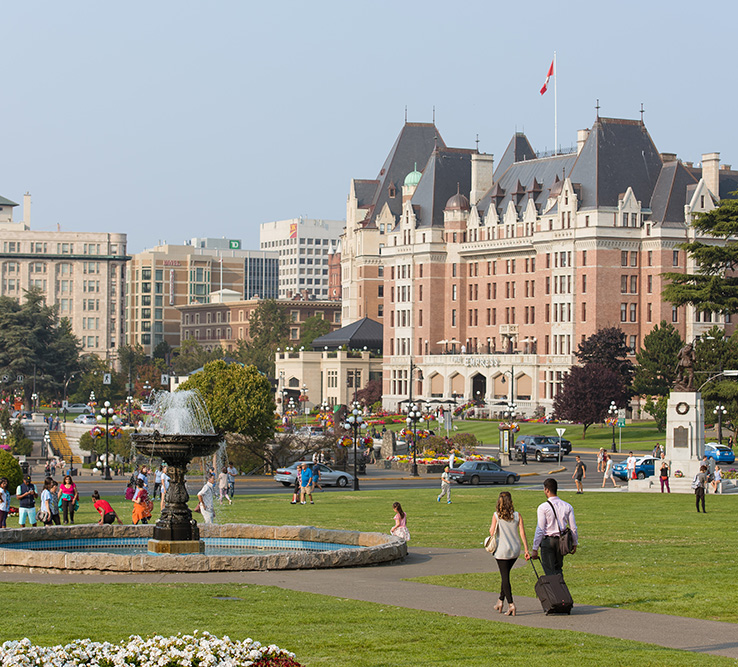
Diving into Victoria Best Guided Adventures's culture, you'll uncover a tapestry of traditions, arts, and historical narratives that shape the city's unique identity. Exploring Victoria Best Guided Adventures's historic landmarks offers you a unique glimpse into the city's vibrant past.
It's here, in these quiet corners of the world, that you can truly connect with the earth and rediscover the peace that comes from simply being. They're equipped to pivot, ensuring your adventure continues seamlessly, regardless of the circumstances. You'll also find yourself meandering through historic alleyways that tell tales of yesteryear, guided by stories that resonate with the heartbeat of the city. Booking is a breeze. Each seasonal special is designed not just to show you the sights but to immerse you in the atmosphere that makes each time of year distinct.
In the spring, you're greeted with the vibrant tulips and daffodils, bursting into life and painting the gardens in a riot of colors.

 |
This article needs additional citations for verification. (December 2009)
|


A tour bus service is an escorted tour (sometimes a package holiday) or bus service that takes visitors sightseeing, with routes around tourist attractions.
 |
It has been suggested that this section be split out into another article titled City tourist bus service. (Discuss) (January 2023)
|
Double-decker buses and open top buses are commonly used, for providing a good view. Large coaches are used internationally by tour operators, intercity bus lines and charters, for short and long distance destinations. These buses are larger than regular transit buses, with 2 to 4 axles (6 to 10 wheels).
The history of tour buses in North America began in the early 20th century, when trucks were converted to provide a means for sightseeing within large American cities.[1] Gray Line, the largest sightseeing operators, began operations in 1910.[2] Sightseeing was likely a side business for many intercity bus operators because the same types of buses were used (this remains true even today). World War II saw the industry decline, but it slowly re-emerged as an alternative to driving.[1]
Many musicians, entertainers, dancing crews and bands travel in sleeper buses, commonly referred to as "tour buses". While most if not all of the buses and coaches listed above are for commercial applications, there are many coaches manufactured for personal use as motorhomes. These bus based motorhomes are considered the top end of the RV market.

| Chassis |
 |
|
|---|---|---|
| Roadway | ||
| Uses | ||
| Power | ||
| Manufacturing | ||
|
|
This article needs additional citations for verification. (January 2023)
|


|
Tours
|
|
|---|---|
|
Prefecture and commune
|
|
|
Medieval buildings on Place Plumereau
Pont Wilson over the Loire
Prébendes d'Oé garden
|
|

Flag

Coat of arms
|
|
|
Location of Tours
 |
|

Tours
|
Coordinates:
47°23′37″N 0°41′21″E / 47.393611°N 0.689167°ECountryFranceRegionCentre-Val de LoireDepartmentIndre-et-LoireArrondissementToursCantonTours-1
Tours-2
Tours-3
Tours-4IntercommunalityTours Métropole Val de LoireGovernment
• Mayor (2020–2026) Emmanuel Denis[1] (The Greens)
34.7 km2 (13.4 sq mi) • Urban
684.9 km2 (264.4 sq mi) • Metro
3,631.6 km2 (1,402.2 sq mi)Population
138,668 • Rank26th in France • Density4,000/km2 (10,000/sq mi) • Urban
359,992 • Urban density530/km2 (1,400/sq mi) • Metro
516,973 • Metro density140/km2 (370/sq mi)Demonym(s)Tourangeau (masculine)
Tourangelle (feminine)Time zoneUTC+01:00 (CET) • Summer (DST)UTC+02:00 (CEST)INSEE/Postal code
Elevation44–119 m (144–390 ft)1 French Land Register data, which excludes lakes, ponds, glaciers > 1 km2 (0.386 sq mi or 247 acres) and river estuaries.
Tours (/tÊŠÉ™r/ TOOR; French: [tuÊÂÂÂÂ] ⓘ) is the largest city in the region of Centre-Val de Loire, France. It is the prefecture of the department of Indre-et-Loire. The commune of Tours had 136,463 inhabitants as of 2018 while the population of the whole metropolitan area was 516,973.[3]
Tours sits on the lower reaches of the Loire, between Orléans and the Atlantic coast. Formerly named Caesarodunum by its founder, Roman Emperor Augustus, it possesses one of the largest amphitheaters of the Roman Empire, the Tours Amphitheatre. Known for the Battle of Tours in 732 AD, it is a National Sanctuary with connections to the Merovingians and the Carolingians, with the Capetians making the kingdom's currency the Livre tournois. Saint Martin and Gregory of Tours were from Tours. Tours was once part of Touraine, a former province of France. Tours was the first city of the silk industry. It was taken by Louis XI, as the royal capital under the Valois Kings with its Loire castles and city of art with the School of Tours. The prefecture was partially destroyed during the French Wars of Religion in the late 16th century and again during the Second World War in June 1940.
The White and Blue city keeps a historical center registered in the UNESCO, and is home to the Vieux-Tours, a patrimonial site. The garden city has a green heritage and an urban landscape strongly influenced by its natural space. The historic city that is nicknamed "Le Petit Paris" and its region by its history and culture has always been a land of birth or host to many personalities, international sporting events, and is a university city with more than 30,000 students in 2019. Tours is a popular culinary city with specialties such as: rillettes, rillons, Touraine vineyards, AOC Sainte-Maure-de-Touraine cheeses and nougats. The city is also the end-point of the annual Paris–Tours cycle race.
A popular folk etymology of the word "Tours" is that it comes from Turonus, the nephew of Brutus. Turonus died in a war between Corineus and the king of Aquitaine, Goffarius Pictus, provoked by Corineus hunting in the king's forests without permission. It is said that Turonus was buried in Tours and the city is founded around his grave.[4]
|
|
In Gallic times, Tours was an important crossing point over the Loire. It became part of the Roman Empire during the 1st century AD, and the city was named Caesarodunum ("hill of Caesar"). The name evolved in the 4th century when the original Gallic name, Turones, became Civitas Turonum and then Tours. It was at this time that the Tours Amphitheatre was built.
Tours became a metropolis in the Roman province of Lugdunum towards 380–388 AD, dominating Maine, Brittany, and the Loire Valley. One important figure in the city was Saint Martin of Tours, a bishop who shared his coat with a naked beggar in Amiens. The importance of Martin in the medieval Christian West made Tours, and its position on the route of pilgrimage to Santiago de Compostela, a major centre during the Middle Ages.
In the 6th century, Gregory of Tours, author of the Ten Books of History, restored a cathedral destroyed by a fire in 561. Saint Martin's monastery benefited from its inception, at the very start of the 6th century from patronage and support from the Frankish king, Clovis I, which increased considerably the influence of the saint, the abbey and the city in Gaul. In the 9th century, Tours was at the heart of the Carolingian Renaissance, in particular because of Alcuin, of York in Northumbria, a renowned book collector and an abbot of Marmoutier Abbey.
In 732, Abdul Rahman Al Ghafiqi and an army of Muslim horsemen from Al-Andalus advanced 500 kilometres (300 miles) deep into France, and were stopped at Moussais-la-Bataille[5] (between Châtellerault and Poitiers) by Charles Martel and his infantry. This ignited the Battle of Tours. The Muslim army was defeated, preventing an Islamic conquest of France.
In 845, Tours repelled the first attack of the Viking chief Haesten. In 850, the Vikings settled at the mouths of the Seine and the Loire. Still led by Haesten, they went up the Loire again in 852 and sacked Angers, Tours and Marmoutier Abbey.
During the Middle Ages, Tours consisted of two juxtaposed and competing centres. The "City" in the east, successor of the late Roman 'castrum', was composed of the cathedral and palace of the archbishops as well as the castle of Tours. The castle of Tours acted as a seat of the authority of the Counts of Tours (later Counts of Anjou) and the King of France. In the west, the "new city" structured around the Abbey of Saint Martin was freed from the control of the city during the 10th century (an enclosure was built towards 918) and became "Châteauneuf". This space, organized between Saint Martin and the Loire, became the economic centre of Tours. Between these two centres were Varennes, vineyards and fields, little occupied except for the Abbaye Saint-Julien established on the banks of the Loire. The two centres were linked during the 14th century.

Tours became the capital of the county of Tours or Touraine, a territory bitterly disputed between the counts of Blois and Anjou – the latter were victorious in the 11th century. It was the capital of France at the time of Louis XI, who had settled in the castle of Montils (today the castle of Plessis-les-Tours, at the junction of the Loire and the Indre rivers). Tours and Touraine remained a permanent residence of the kings and court until the 16th century. The Renaissance gave Tours and Touraine many private mansions and castles, joined to some extent under the generic name of the Châteaux of the Loire. It is also at the time of Louis XI that the silk industry was introduced – despite difficulties, the industry still survives to this day.
Charles IX passed through the city at the time of his royal tour of France between 1564 and 1566, accompanied by the Court and various noblemen: his brother the Duke of Anjou, Henri de Navarre, the cardinals of Bourbon and Lorraine. At this time, the Catholics returned to power in Angers: the attendant assumed the right to nominate the aldermen. The Massacre of Saint-Barthelemy was not repeated at Tours. The Protestants were imprisoned by the aldermen – a measure which prevented their extermination. The permanent return of the Court to Paris and then Versailles marked the beginning of a slow but permanent decline. Guillaume the Metayer (1763–1798), known as Rochambeau, the well-known counter-revolutionary chief of Mayenne, was shot in Tours.
The arrival of the railway in the 19th century saved the city by making it an important nodal point. The main railway station is known as Tours-Saint-Pierre-des-Corps. At that time, Tours was expanding towards the south into a district known as the Prébendes. The importance of the city as a centre of communications contributed to its revival and, as the 20th century progressed, Tours became a dynamic conurbation, economically oriented towards the service sector.

The city was greatly affected by the First World War. A force of 25,000 American soldiers arrived in 1917, setting up textile factories for the manufacture of uniforms, repair shops for military equipment, munitions dumps, an army post office and an American military hospital at Augustins. Because of this, Tours became a garrison town with a resident general staff. The American presence is remembered today by the Woodrow Wilson Bridge over the Loire, which was officially opened in July 1918 and bears the name of the President of the United States from 1913 to 1921. Three American air force squadrons, including the 492nd, were based at the Parçay-Meslay airfield, their personnel playing an active part in the life of the city. Americans paraded at funerals and award ceremonies for the Croix de Guerre. They also took part in festivals and their YMCA organised shows for the troops. Some men married women from Tours.
In 1920, the city hosted the Congress of Tours, which saw the creation of the French Communist Party. One future consequence of that congress was the presence of Ho Chi Minh, the Vietnamese nationalist, who became one of the first members of the party.
Tours was also marked by the Second World War, as the city suffered massive destruction in 1940. For four years it was a city of military camps and fortifications. From 10 to 13 June 1940, Tours was the temporary seat of the French government before its move to Bordeaux.
German incendiary bombs caused a huge fire, which blazed out of control from 20 to 22 June and destroyed part of the city centre. Some architectural masterpieces of the 16th and 17th centuries were lost, as was the monumental entry to the city. The Wilson Bridge, which carried a water main that supplied the city, was dynamited to slow the progress of the German advance. With the water main severed, nobody could extinguish the inferno. That made inhabitants have no option but to flee to safety. More heavy air raids by Allied forces devastated the area around the railway station in 1944, causing several hundred deaths.
A plan for the rebuilding of the central area drawn up by the local architect Camille Lefèvre had been adopted even before the end of the war. The plan was for 20 small quadrangular blocks of housing to be arranged around the main road (la rue Nationale), which was widened. This regular layout attempted to echo but simplify the 18th-century architecture. Pierre Patout succeeded Lefèvre as the architect in charge of rebuilding in 1945. At one time, there was talk of demolishing the southern side of the rue Nationale to make it in keeping with the new development.
The recent history of Tours is marked by the personality of Jean Royer, who was mayor for 36 years and helped save the old town from demolition by establishing one of the first Conservation Areas. This example of conservation policy would later inspire the Malraux Law for the safeguarding of historic city centres. In the 1970s, Jean Royer also extended the city to the south by diverting the course of the Cher River to create the districts of Rives du Cher and des Fontaines. At the time, it was one of the largest urban developments in Europe. In 1970, the François Rabelais University was founded and centred on the bank of the Loire in the downtown area, not, as was the current practice, in a campus in the suburbs. The latter solution was also chosen by the twin university of Orleans. Royer's long term as mayor was, however, not without controversy, as is exemplified by the construction of the practical but aesthetically unattractive motorway, which runs along the bed of a former canal just 1,500 metres (4,900 feet) from the cathedral. Another bone of contention was the original Vinci Congress Centre by Jean Nouvel. The project incurred debts although it at least made Tours one of France's principal conference centres.
Jean Germain, a member of the Socialist Party, became mayor in 1995 and made debt reduction his priority. Ten years later, his economic management was regarded as much wiser than that of his predecessor because of the financial stability of the city returning. However, his achievements were criticised by the municipal opposition for a lack of ambition. There were no large building projects instituted under his two terms. That position is disputed by those in power, who affirm their policy of concentrating on the quality of life, as evidenced by urban restoration, the development of public transport and cultural activities.
Tours has an oceanic climate that is very mild for such a northern latitude. Summers are influenced by its inland position, resulting in frequent days of 25 °C (77 °F) or warmer, whereas winters are kept mild by Atlantic air masses. The entire valley between Orlans and Angers is famous for the luminosity of its air and for its fabulous châteaux, most of them Renaissance (over 600 between Orlans and Angers).
| Climate data for Tours (1991–2020 averages) | |||||||||||||
|---|---|---|---|---|---|---|---|---|---|---|---|---|---|
| Month | Jan | Feb | Mar | Apr | May | Jun | Jul | Aug | Sep | Oct | Nov | Dec | Year |
| Record high °C (°F) | 16.9 (62.4) |
22.1 (71.8) |
25.3 (77.5) |
29.2 (84.6) |
31.8 (89.2) |
39.1 (102.4) |
40.8 (105.4) |
39.8 (103.6) |
35.5 (95.9) |
31.1 (88.0) |
22.3 (72.1) |
18.5 (65.3) |
40.8 (105.4) |
| Mean daily maximum °C (°F) | 7.7 (45.9) |
9.0 (48.2) |
12.9 (55.2) |
16.0 (60.8) |
19.6 (67.3) |
23.4 (74.1) |
25.9 (78.6) |
26.0 (78.8) |
22.1 (71.8) |
17.0 (62.6) |
11.4 (52.5) |
8.1 (46.6) |
16.6 (61.9) |
| Daily mean °C (°F) | 5.1 (41.2) |
5.6 (42.1) |
8.6 (47.5) |
11.0 (51.8) |
14.5 (58.1) |
18.0 (64.4) |
20.2 (68.4) |
20.2 (68.4) |
16.8 (62.2) |
13.0 (55.4) |
8.3 (46.9) |
5.5 (41.9) |
12.2 (54.0) |
| Mean daily minimum °C (°F) | 2.5 (36.5) |
2.3 (36.1) |
4.3 (39.7) |
6.0 (42.8) |
9.4 (48.9) |
12.6 (54.7) |
14.4 (57.9) |
14.3 (57.7) |
11.4 (52.5) |
9.0 (48.2) |
5.3 (41.5) |
2.9 (37.2) |
7.9 (46.2) |
| Record low °C (°F) | −17.4 (0.7) |
−14.2 (6.4) |
−10.3 (13.5) |
−3.4 (25.9) |
−0.6 (30.9) |
2.6 (36.7) |
4.3 (39.7) |
4.8 (40.6) |
0.9 (33.6) |
−2.3 (27.9) |
−7.1 (19.2) |
−18.5 (−1.3) |
−18.5 (−1.3) |
| Average precipitation mm (inches) | 63.0 (2.48) |
52.4 (2.06) |
48.7 (1.92) |
53.0 (2.09) |
57.7 (2.27) |
53.2 (2.09) |
46.6 (1.83) |
44.0 (1.73) |
51.8 (2.04) |
66.0 (2.60) |
69.3 (2.73) |
72.1 (2.84) |
677.8 (26.69) |
| Average precipitation days | 11.0 | 9.8 | 9.3 | 8.9 | 9.0 | 7.6 | 6.7 | 6.6 | 7.5 | 9.8 | 11.4 | 11.5 | 109.0 |
| Average snowy days | 2.4 | 2.9 | 1.8 | 0.7 | 0.1 | 0.0 | 0.0 | 0.0 | 0.0 | 0.0 | 1.0 | 1.7 | 10.6 |
| Average relative humidity (%) | 87 | 84 | 79 | 74 | 77 | 75 | 72 | 73 | 77 | 84 | 87 | 89 | 79.8 |
| Mean monthly sunshine hours | 68.4 | 95.2 | 148.8 | 187.3 | 214.2 | 228.5 | 247.1 | 237.7 | 191.3 | 122.9 | 78.9 | 64.6 | 1,884.8 |
| Source 1: Météo France[6][7] | |||||||||||||
| Source 2: Infoclimat.fr (humidity and snowy days, 1961–1990)[8] | |||||||||||||


|
|
The Cathedral of Tours, dedicated to Saint Gatien, its canonized first bishop, was begun about 1170 to replace the cathedral that was burnt out in 1166 during the dispute between Louis VII of France and Henry II of England. The lowermost stages of the western towers belong to the 12th century, but the rest of the west end is in the profusely detailed 15th-century Flamboyant Gothic, which were completed just as the Renaissance was affecting the patrons who planned the châteaux of Touraine. The towers were being constructed at the same time as, for example, the Château de Chenonceau.
When the 15th-century illuminator Jean Fouquet was set the task of illuminating Josephus's Jewish Antiquities, his depiction of Solomon's Temple was modelled on the nearly complete cathedral of Tours. The atmosphere of the Gothic cathedral close permeates Honoré de Balzac's dark short novel of jealousy and provincial intrigues, Le Curé de Tours (The Curate of Tours) and his medieval story Maître Cornélius opens in the cathedral itself.
|
|
This section needs additional citations for verification. (May 2021)
|
Before the French Revolution, the inhabitants of Tours (Les Tourangeaux) were known for speaking the "purest" form of French in the entire country.[9] The pronunciation of Touraine was traditionally regarded as the most standard pronunciation of the French language, until the 19th century when the standard pronunciation of French shifted to that of the Parisian bourgeoisie.[10] That is explained by the fact that the court of France lived in Touraine between 1430 and 1530. French, the language of the court, had become the official language of the entire kingdom.
A Council of Tours in 813 decided that priests should preach sermons in different languages because the common people could no longer understand classical Latin. This was the first official recognition of an early French language distinct from Latin, and can be considered as the birth of French.
The Ordinance of Montils-lès-Tours, promulgated by Charles VII in 1454, made it mandatory to write laws and oral customs in the native language of the area.
An ordinance of Charles VIII (born in Amboise, near Tours) in 1490 and one of Louis XII (born in Blois, near Tours) in 1510 broaden the scope of the ordinance of Charles VII.
Finally, the Ordinance of Villers-Cotterêts, signed into law by Francis I in 1539, called for the use of French in all legal acts, notarized contracts and official legislation to avoid any linguistic confusion.
Gregory of Tours wrote in the 6th century that some people in the area could still speak Gaulish.
|
|
This section needs additional citations for verification. (May 2021)
|

The city has a population of 140,000 and is called "Le Jardin de la France" ("The Garden of France"). There are several parks located within the city. Tours is located between two rivers, the Loire to the north and the Cher to the south. The buildings of Tours are white with blue slate (called Ardoise) roofs; this style is common in the north of France, while most buildings in the south of France have terracotta roofs.
Tours is famous for its original medieval district, called le Vieux Tours. Unique to the Old City are its preserved half-timbered buildings and la Place Plumereau, a square with busy pubs and restaurants, whose open-air tables fill the centre of the square. The Boulevard Beranger crosses the Rue Nationale at the Place Jean-Jaures and is the location of weekly markets and fairs.
Tours is famous for its many bridges crossing the river Loire. One of them, Wilson Bridge, collapsed in 1978 but was rebuilt.
In the garden of the ancient Palais des Archevêques (now Musée des Beaux-Arts) is a huge cedar tree said to have been planted by Napoleon.[11] The garden also has a stuffed elephant named Fritz. He escaped from the Barnum and Bailey circus during their stay in Tours in 1902. He went mad and had to be shot down, but the city paid to honor him, and he was taxidermied as a result.
Tours is home to University of Tours (formerly known as University François Rabelais of Tours), the site of one of the most important choral competitions, called Florilège Vocal de Tours International Choir Competition, and is a member city of the European Grand Prix for Choral Singing.
The population data in the table and graph below refer to the commune of Tours proper, in its geography at the given years. The commune of Tours absorbed the former commune of Saint-Étienne in 1845 and Sainte-Radegonde-en-Touraine and Saint-Symphorien in 1964.[12]
 |
Graphs are unavailable due to technical issues. Updates on reimplementing the Graph extension, which will be known as the Chart extension, can be found on Phabricator and on MediaWiki.org.
|
|
|
||||||||||||||||||||||||||||||||||||||||||||||||||||||||||||||||||||||||||||||||||||||||||||||||||||||||||||||||||
|
|
|||||||||||||||||||||||||||||||||||||||||||||||||||||||||||||||||||||||||||||||||||||||||||||||||||||||||||||||||||
| Source: EHESS[12] and INSEE (1968–2017)[13] | |||||||||||||||||||||||||||||||||||||||||||||||||||||||||||||||||||||||||||||||||||||||||||||||||||||||||||||||||||

Today, with extensive rail (including TGV) and autoroute connections linking to the rest of the country, Tours is a jumping-off point for tourist visits to the Loire Valley and the royal châteaux.
Tours is on one of the main lines of the TGV. It is possible to travel to the west coast of Bordeaux in an hour and forty minutes. From there, the line follows the Mediterranean coast via Avignon, and then to Spain and Barcelona. There are also lines to Lyon, Strasbourg and Lille. It takes less than one hour by train to get from Tours to Paris by TGV and one and a half hours to get to Charles de Gaulle Airport. Tours has two main stations: Gare de Tours, the central station, and Gare de Saint-Pierre-des-Corps, used by trains that do not terminate in Tours.
Tours Loire Valley Airport connects the Loire Valley to European cities.
Historically, Tours was served by trams and trolleybuses, the trolleybus system lasting from 1949 to 1968. Tram service returned to the city in 2013, when a new tram system began operation. Twenty-one Alstom Citadis trams were ordered.[14]
There is also a bus service, the main central stop being Jean Jaurès, next to the Hôtel de Ville, and rue Nationale, the high street of Tours. The tram and bus networks are operated by Fil Bleu and they share a ticketing system. A second tram line is scheduled for 2025.[15]
The city's football team, Tours FC, currently play in Championnat National 3, the fifth level of French football. They also have a second team, CCSP Tours. CCSP's home stadium is the Stade des Tourettes and they play in the Division d'Honneur Regionale de Centre, the seventh tier of the French football league system.[citation needed]
Tours has served as the finish location for Paris–Tours, a one-day road cycling classic race held almost every October since 1896.[16]
Tours also has a volleyball club named the Tours VB.

Tours is a special place for Catholics who follow the devotion to the Holy Face of Jesus and the adoration of the Blessed Sacrament. In 1843, Sister Marie of St Peter of Tours reported a vision which started the devotion to the Holy Face of Jesus, in reparation for the many insults Christ suffered in His Passion. The Golden Arrow Prayer was first made public by her.
The Venerable Leo Dupont also known as The Holy Man of Tours lived in Tours at about the same time. In 1849 he started the nightly adoration of the Blessed Sacrament, which spread throughout France. Upon hearing of Sister Marie of St Peter's reported visions, he started to burn a vigil lamp continuously before a picture of the Holy Face of Jesus. The devotion was eventually approved by Pope Pius XII in 1958 and he formally declared the Feast of the Holy Face of Jesus as Shrove Tuesday (the Tuesday before Ash Wednesday) for all Roman Catholics.[17] The Oratory of the Holy Face on Rue St. Etienne in Tours receives many pilgrims every year.
Tours was the site of the episcopal activity of St. Martin of Tours and has further Christian connotations in that the pivotal Battle of Tours in 732 is often considered the first decisive victory over the invading Islamic forces, turning the tide against them. The battle also helped lay the foundations of the Carolingian Empire.[18]


Tours is twinned with:[28]
 Mülheim, Germany, since 1962
 Segovia, Spain, since 1972
 Parma, Italy, since 1976
 Luoyang, China, since 1982
 Trois-Rivières, Canada, since 1987
 Takamatsu, Japan, since 1988
 Brașov, Romania, since 1990
 Minneapolis, Minnesota USA, since 1991


|
|
|
| International | |
|---|---|
| National | |
| Geographic | |
| Other | |
Yes, Star Sightseeing can organize private or customized tours for your special occasions like birthdays or anniversaries. They'll tailor the experience to your preferences, making your celebration memorable and unique to your needs.
Star Sightseeing takes environmental sustainability seriously. They use eco-friendly vehicles, limit tour sizes to reduce impact, and support local conservation efforts, ensuring you enjoy Victoria's beauty without harming its natural wonders.
Yes, accommodations for dietary restrictions can be made during meal or snack times on the tour. You'll need to inform the tour operator in advance so they can ensure your needs are adequately met.


